
A Deep Guide to Spirit Animal and Totemic Wisdom
- 5 January 2026
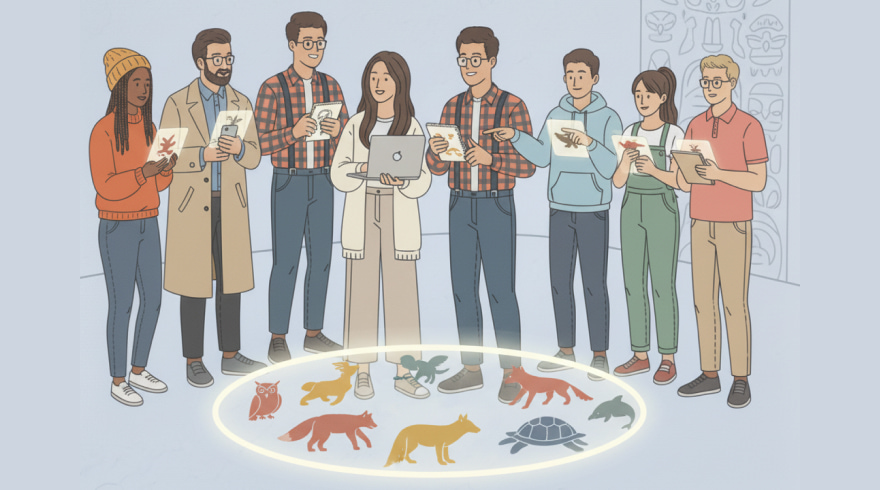
Identify the Power of Your Spirit Animal Totem
Get StartedIntroduction to Totemic Connection and Purpose
People across continents have long turned to symbolic creatures for guidance, resilience, and a deeper sense of belonging. The relationship is reciprocal: you offer attention and respect, and in return you receive signs, nudges, and reminders of your authentic path. Rather than a superstition, this practice functions like a living map for personal growth, pointing you toward values, strengths, and blind spots that are ready to evolve. As you develop rapport with a guiding presence, your intuition becomes more precise and your choices feel aligned with an inner compass that doesn’t waver in turbulent times.
Within this wider landscape of meaning-making, animal spirit totems act like anchors that hold steady during change and uncertainty. They can illuminate where your energy wants to flow, how your gifts might serve others, and what habits are ready to be shed. This approach also invites mindful observation: you begin to notice repeating patterns, chance meetings, dream motifs, and synchronistic encounters that seem too consistent to ignore. Subtle recognition builds over time, and eventually the symbolic language starts to feel native, as if you have always known how to interpret it.
- Use daily prompts to record sightings, dreams, and emotions tied to specific creatures.
- Explore cultural perspectives with humility, honoring the communities that steward these teachings.
- Test insights in real life rather than treating symbolism as abstract theory.
- Return to embodiment through breath, movement, and time outdoors to ground your interpretation.
History, Cross‑Cultural Roots, and Responsible Learning
Many Indigenous nations, wisdom keepers, and earth‑honoring lineages have cultivated relational ways of knowing for countless generations. These traditions emphasize reciprocity, ceremony, and ethical boundaries, reminding seekers to approach with reverence rather than consumption. Oral histories, art, and seasonal rites embed teachings in a community context, which is why responsible learners credit sources, avoid appropriation, and support the people who protect the teachings. When approached with care, the practice becomes a bridge rather than a shortcut.
In historical narratives, the phrase totem animal has often been flattened by pop culture into a personality quiz, yet its deeper meaning has to do with kinship, responsibility, and place. The symbol expresses both a personal bond and a communal role, showing how identity is interwoven with land and story. Context matters because the same creature may carry very different messages across regions and languages. Listening to cultural stewards therefore expands your understanding and prevents generalized, one‑size‑fits‑all interpretations.
Within contemporary spirituality, people sometimes speak of an animal totem as a mirror for latent qualities asking to be embodied. That might include courage tempered by care, strategic patience instead of delay, or communal leadership grounded in service. The point is not acquisition but alignment: you do not own a symbol; you participate in a relationship. Readings, journaling, and nature immersion become tools for discernment rather than shortcuts to certainty.
- Credit original sources and teachers whenever you share stories or practices.
- Support Indigenous organizations and learn consent‑based ways of engagement.
- Avoid stereotyping creatures by remembering ecological and cultural specificity.
Identifying Your Guide: Signs, Methods, and Interpretation
Clarity emerges when observation meets intention, so begin with simple rituals that attune your senses. A short breath practice followed by quiet outdoor time helps you notice unusual patterns: a bird landing unusually close, a dream that repeats, or a symbol that keeps showing up in songs and conversations. Keep a notebook dedicated to these moments, and write down the mood, weather, and any practical decisions you were considering that day. Over a few weeks, patterns coalesce into a consistent thread you can follow.
For many seekers, asking “what is a spirit totem” leads to a shift from theory to lived experience through small, verifiable experiments. You can set an intention before sleep, request a clarifying sign within three days, or draw a circle of images and let your body point to a choice rather than forcing a rational answer. Repeatable rituals build trust, while gentle skepticism keeps your feet on the ground and your interpretations honest. Over time, you learn the difference between wishful thinking and a genuine nudge.
As your practice matures, reflections such as “How does this symbol want to be honored?” become more important than “What do I get from it?” When you ask respectful questions, insights often land quickly, showing you where to place your energy next. In moments of uncertainty, you might whisper a simple phrase like “Guide, show me the next true step,” and then follow the evidence that arrives.
| Sign | Where It Appears | Meaning Prompt | Suggested Action |
|---|---|---|---|
| Repeated animal imagery | Dreams, ads, murals | What quality is being mirrored right now? | Journal three traits and one practical application today |
| Unusual proximity | Yard, trail, commute | What boundary or invitation is present? | Offer gratitude and adjust one habit that aligns with the message |
| Synchronic phrases | Conversations, songs | What decision needs courage or patience? | Make a micro‑commitment within 24 hours |
| Body sensations | Chills, warmth, calm | Where do you feel yes/no in your body? | Breathe there for one minute, then act on the clearest cue |
During this unfolding, a simple affirmation like “I welcome aligned symbols and grounded wisdom” helps stabilize your attention. In private moments of reflection, you might also speak softly to my totem, asking for guidance that is kind, timely, and useful for everyone involved. The conversation then becomes relational, practical, and humble rather than performative or extractive.
Practical Benefits in Modern Life: Clarity, Resilience, and Focus
In a noisy world, a steady symbolic relationship can cut through overwhelm by narrowing your focus to what genuinely matters. When you translate a message into a single action, your priorities clarify and your calendar reflects your values. This helps reduce decision fatigue, improve creative flow, and lower stress by replacing rumination with direction. You also cultivate embodied confidence: you move from second‑guessing to testing, reflecting, and refining in short cycles that keep momentum alive.
For personal growth, speaking kindly to my totem animal turns abstract inspiration into tangible routines, such as a three‑minute breath practice before difficult meetings or a mindful walk after work. These humble rituals compound into visible change, strengthening your capacity to stay centered when pressure spikes. Communication improves as well because symbols offer a shared story that teammates and loved ones can understand without jargon.
Career decisions also benefit when you decide to find my totem animal through ethical, reflective methods. The process helps you name the environments where you thrive and the roles that fit your temperament. By mapping your projects to the qualities symbolized by your guiding presence, you create a personal strategy that is both visionary and grounded. Over time, you protect your energy by saying yes to aligned opportunities and no to performative busyness.
- Translate each insight into one measurable behavior change.
- Anchor new habits to existing routines to increase consistency.
- Celebrate small wins to reinforce the relationship and your momentum.
Rituals, Ethics, and Daily Practice for Authentic Connection
Ritual supports reliability, so begin small and keep it honest. A weekly nature sit, a cup of tea in silence, or a gentle movement sequence can be enough to attune your senses. You might create a modest altar with a found feather, a sketch, or a simple stone rather than rare objects, emphasizing relationship over display. Integrity matters: avoid language that treats living cultures or ecosystems as a commodity, and choose offerings that respect the land where you live.
As your sensitivity grows, you may wish to find your totem animals through layered practices that include breathwork, dream incubation, and time near rivers, forests, or deserts. Tracking your moods alongside sightings reveals the timing of messages, showing when to speak up, when to wait, and when to rest. Clear boundaries also support discernment: if a sign feels vague, ask for a second confirmation within a set window and proceed only with alignment.
Some seekers feel drawn to find your animal totem by collaborating with mentors who emphasize consent, cultural humility, and ecological care. Choose guidance that invites your autonomy rather than dependency, and remember that relationship ripens through seasons. When you approach this path with patience, gratitude, and reciprocity, your practice remains steady even when life becomes complex.
- Keep offerings biodegradable and locally appropriate.
- Rotate practices with the seasons to stay responsive and fresh.
- Use community for accountability without outsourcing your intuition.
Archetypes, Symbol Language, and Creative Application
Every creature embodies a cluster of qualities that can be translated into practical strategies. Owl might signal luminous attention in the dark, while Deer whispers about graceful boundaries that move rather than harden. Bear can speak to cyclical power, asking you to honor dormancy as much as action, and Fox brings adaptive intelligence that solves problems sideways. When you frame these motifs as living questions, your day becomes an experiment in applied wisdom.
Within many circles, people discuss totem spirit animals by focusing on qualities, choices, and behaviors that can be practiced immediately. This action‑first orientation prevents the work from becoming abstract, and it keeps your relationship honest because results show up in your calendar. A symbol that asks for rest should lead to adjusted schedules, not just poetic journal entries. Real‑world change is where meaning becomes measurable.
When conversations center on ecology and place, you’ll also hear about spirit totem animals in the context of habitat health, migration cycles, and seasonal rhythms. Such lenses keep the practice connected to the living world rather than confined to personal psychology. By aligning your routines with the land and weather around you, your decisions gain both humility and potency, and your creativity taps into a wider field of intelligence.
- Translate a single archetype into three concrete behaviors for the week.
- Notice how your body reacts to each behavior and iterate accordingly.
- Share learnings with trusted peers to enrich the symbol language together.
Faq: Common Questions About Totemic Practice
How do I know a sign is meaningful and not random?
Meaning grows through repetition, timing, and relevance to a real decision. Track patterns for a few weeks and look for clusters that correlate with choices you are actually making, then test a small action and observe the outcome.
Can I have more than one guiding presence?
Yes, relationships can be seasonal or situational, and one ally may step forward while another recedes. Let usefulness and integrity guide your attention rather than collecting symbols for status.
What if I feel skeptical about all of this?
Skepticism is healthy because it keeps interpretations honest and grounded. Try a short experiment with clear criteria for success and let outcomes, not wishful thinking, shape your conclusions.
How do I begin if I feel overwhelmed by information?
Start with a simple routine like a five‑minute sit outdoors and a one‑page journal, then add practices only when they prove helpful. For structure without overwhelm, many seekers appreciate an animal totem guide that emphasizes ethics, embodiment, and small, testable steps.
What is the most respectful way to honor cultural traditions?
Learn from community‑endorsed teachers, credit your sources, and support Indigenous organizations that steward these teachings. Choose offerings and language that demonstrate reciprocity, humility, and care for land and people.